Who This Guide Is For
This guide is for anyone who wants a pantry that's easy to use every day — not just a pantry that looks organized in photos. If you open your pantry and immediately can't find what you're looking for, or if items from the back of a shelf regularly expire because they're hidden, the right organizers can genuinely fix that.
We focus on practical products for real kitchens: apartments with small pantry closets, families with high-rotation snacks and dry goods, and households where multiple people need to find things quickly without reorganizing every time. We do not cover garage-scale storage systems or specialty food preservation equipment here.
How We Chose These Products
We research, compare, and explain products based on use cases, specifications, public product information, and buyer needs. For pantry organizers, the selection criteria were: recognizable brands with established availability, designs that solve specific pantry problems (visibility, accessibility, stackability), and products that work across different pantry sizes and layouts. We did not consider products with unclear specifications or those from brands without a track record on Amazon.
Things to Know Before You Buy
Measure first — always
The single most common pantry organizer mistake is buying before measuring. Shelf depth, shelf width, and the height between shelves all affect which products work in your space. Write down those three numbers before you buy anything. A bin that's slightly too wide, too deep, or too tall will either not fit at all or create awkward dead space that defeats the purpose.
Clear vs. opaque
Clear storage wins in pantries almost every time. You can see what's inside without opening or moving bins, which means you'll actually use the system instead of ignoring it. Opaque bins have a place for categories where appearance matters (a shelf visible from the kitchen), but for functional pantry storage, clear is almost always the better choice.
Airtight is not necessary for everything
Airtight containers are genuinely useful for flour, sugar, dried pasta, rice, cereals, and other dry goods that come in bags or boxes. For canned goods, bottled items, or anything already sealed, airtight storage adds cost without adding value. Match your container type to the specific category you're organizing.
Group by category, not by container size
Pantry organization works best when you organize by what something IS rather than by where it fits. One bin for baking supplies, one for pasta, one for snacks — even if that means mixing container sizes. A well-categorized pantry is faster to navigate than a visually uniform one where everything is mixed.
Quick Picks — Comparison Table
| Product | Best for | Format | What to consider | Amazon |
|---|---|---|---|---|
| Vtopmart Clear Bins (6-Pack) | Clear pantry bin sets | 6-pack, medium, handles | Measure shelves before choosing size | View exact product |
| OXO Good Grips POP Containers | Airtight dry-goods storage | 5-piece set, push-button lid | Check set sizes match your categories | View exact product |
| mDesign 2-Tier Lazy Susan | Corner cabinet and deep shelf rotation | 9-inch, 2-tier, 360° spin | Measure cabinet clearance for 9-inch footprint | View exact product |
Product Guides
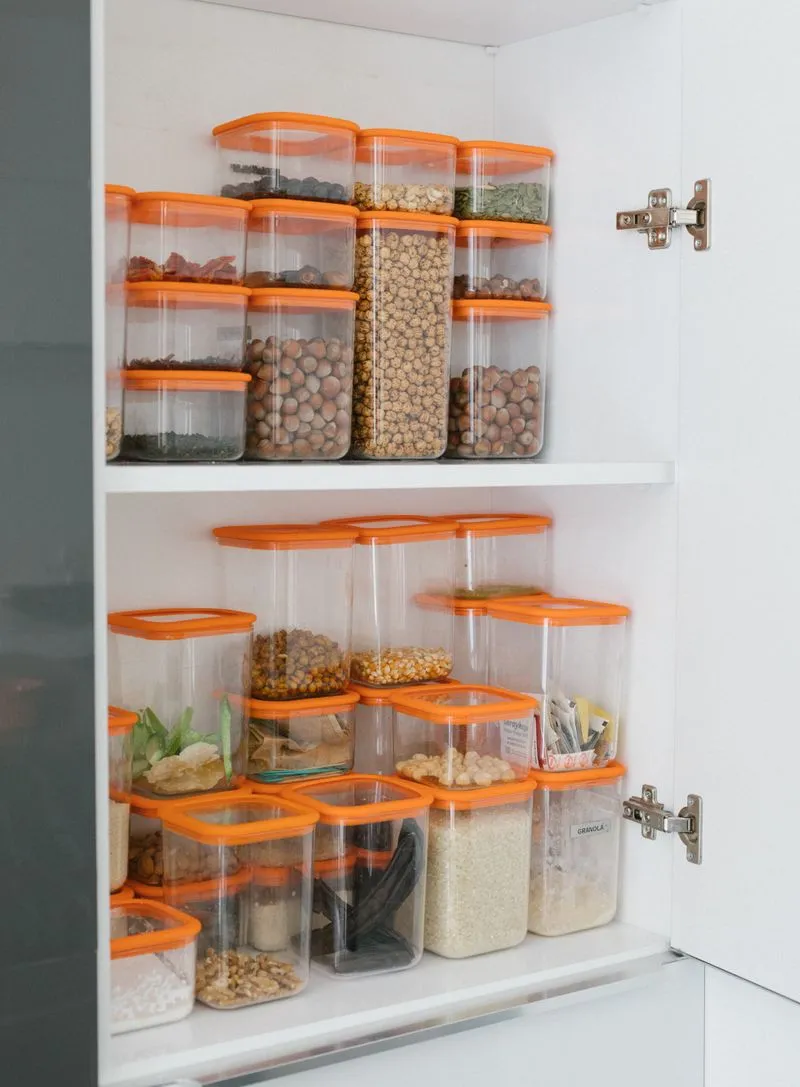
Representative home organization image — view exact product photos on Amazon.
Vtopmart Clear Storage Bins, 6-Pack Medium
Best for: Clear pantry bin sets
Format: 6-pack, medium size, handles included
A set of six clear bins with built-in handles that makes it easy to pull out and see exactly what's in your pantry at a glance. BPA-free construction and a handle-forward design make these practical for daily use in pantries, refrigerators, and kitchen cabinets. Medium size fits most standard pantry shelves.
Representative home organization image — view exact product photos on Amazon.
OXO Good Grips 5-Piece POP Container Set
Best for: Airtight dry-goods storage
Format: 5-piece set, assorted sizes
Five airtight containers with OXO's push-button locking lid that creates an air-tight seal and doubles as a handle. Designed specifically for dry goods like flour, sugar, pasta, and snacks. Stackable and see-through for easy pantry organization. A longstanding choice for organized households.
Representative home organization image — view exact product photos on Amazon.
mDesign 2-Tier Lazy Susan Turntable, 9-inch
Best for: Corner cabinet and pantry shelf rotation
Format: 9-inch diameter, 2-tier, 360° rotation
A two-level rotating turntable that makes corner cabinets and pantry shelves far more accessible. Spins 360° on smooth ball bearings, so items stored at the back are always reachable with a turn. Works well for cans, spices, oils, condiments, and sauces. Clear design lets you see everything on both levels.
Pantry Organization Buyer Guide
The right system for your pantry type
Walk-in pantries and pantry closets benefit most from clear pull-out bins organized by food category. Deep shelves where items disappear to the back are best served by a lazy susan turntable. Small apartment pantries with limited shelf space benefit most from stackable containers that use vertical space efficiently.
Clear bins: what the handles are actually for
The handles on clear pantry bins are not just aesthetic — they let you pull out an entire category of food in one motion, check inventory, and slide it back in. This pull-out dynamic is what makes labeled bins useful: instead of scanning a shelf for individual items, you pull the "pasta" bin, grab what you need, and return it. Bins without handles work but are less practical for daily pantry use.
How many containers do you actually need?
Start with fewer than you think. Most households over-buy containers and then struggle to use all of them consistently. A good starting point: identify your five to eight most common pantry categories (snacks, breakfast, pasta, baking, canned goods, etc.) and buy one bin per category. Expand from there once you've seen how the system works in real use.
Maintaining a pantry system over time
The systems that last are the ones that are easy to maintain, not just easy to set up. That means: containers that are easy to open and close, bins that are easy to pull out and return, and organization that every household member understands. If a system is too perfect or too complicated, it will slowly collapse. Make it functional first, aesthetics second.
Frequently Asked Questions
What size pantry bins should I buy?
Measure your shelves first. Depth matters as much as width. For standard pantry shelves (typically 12–16 inches deep), medium-sized bins work well for most categories. For deep shelves or corner cabinets, a lazy susan turntable usually works better than a fixed bin because it lets you access items in the back without pulling everything out.
Are airtight containers worth it for a pantry?
Yes, for specific categories. Flour, sugar, pasta, rice, cereal, and other dry goods that come in bags or boxes benefit significantly from airtight storage — they stay fresh longer and pests cannot get in. For canned goods, bottled items, or anything already in sealed original packaging, airtight containers don't add much value and regular bins work fine.
Do lazy susans work in pantries, or are they just for corner cabinets?
Lazy susans work extremely well in pantries — not just corner cabinets. On a deep pantry shelf, a rotating turntable lets you spin items from the back to the front without reaching in. They're especially useful for canned goods, spice jars, and condiment bottles. A 2-tier lazy susan roughly doubles the visible surface area compared to a flat shelf of the same footprint.
How do I keep my pantry organized after setting it up?
The key is making the system easier to maintain than to ignore. Group similar items together. Use consistent-sized containers so bins stack cleanly. Return items to their designated spot every time. The initial setup does most of the work — after that, it's just returning things to where they already belong.