Best Food Processors for Home Cooks: Full-Size, Compact, and Mini Chopper Picks for 2026
The best food processors for home cooks in 2026 — full-size, compact, and mini chopper picks. Honest guide: no fake ratings, no sponsored rankings.
In this guide
Affiliate Disclosure:
As an Amazon Associate I earn from qualifying purchases. Product images shown may be representative lifestyle photos unless official product images are available through an approved Amazon data source. We do not display live prices, ratings, or availability.
Representative kitchen image — view exact product photos on Amazon.
Who This Guide Is For
This guide is for home cooks who do regular meal prep and want a food processor that reduces repetitive chopping and slicing time. We cover picks for three distinct needs: a full-size 14-cup processor for families and batch cookers, a compact 10-cup model for smaller households with moderate prep needs, and a 9-cup mid-size option with preset programs for cooks who want more automation.
We are not covering commercial food processors, mini choppers under 3 cups, or specialized processors (such as those designed exclusively for baby food or bread dough). If you cook regularly for 2–6 people and want an appliance that reduces knife work for vegetables, cheese, and prep tasks, these picks apply directly to your use case.
How We Chose These Food Processors
We research, compare, and explain products based on use cases, specifications, public product information, and buyer needs. Our selection criteria for home cook food processors:
Bowl capacity and household fit: A 14-cup model is not the right choice for a single person, and a 4-cup chopper cannot batch-prep for a family. We matched capacity to realistic cooking scenarios.
Motor wattage and consistency: A higher wattage motor handles hard vegetables and dough more consistently. We prioritized motors that perform reliably on common tasks without stalling.
Ease of cleaning: Dishwasher-safe bowls and blades reduce friction for daily use. Models with many small parts or difficult assembly were deprioritized.
Blade and disc variety: Slicing, shredding, and chopping discs expand what a food processor can do. We looked for models where the included accessories cover everyday needs without requiring add-on purchases.
Established product lines: We selected products with documented availability, not first-generation releases from unfamiliar brands.
5 Things to Know Before You Buy a Food Processor
Food Processor Buyer's Checklist
Cup capacity is measured in uncooked, uncut volume — not cooked. A 14-cup food processor bowl holds 14 cups of whole or cut vegetables before processing. Most recipes call for far less than a full bowl. For a family of 4 prepping a week of lunches, a 9–14 cup processor handles full-batch cooking comfortably.
The blade does most of the work — the discs expand it. The S-blade that comes standard handles chopping, mincing, and pureeing. Slicing and shredding discs (included or optional) handle cheese, cabbage, potatoes, and carrots. Check which discs are included before buying if shredding or slicing is a priority use case.
Wattage determines how well it handles hard or dense ingredients. A 450–550W motor handles soft vegetables and herbs well. For raw carrots, hard cheese, bread dough, or nuts, a 700W+ motor processes more consistently without laboring. The Ninja BN601 at 1000 peak watts handles the hardest inputs in all three picks.
Feed tube size affects whether you pre-cut produce. A wide feed tube lets you drop in a whole carrot or half an onion. A narrow feed tube requires you to cut everything smaller before loading. For busy meal prep, a wide feed tube is a practical time-saver.
Counter storage vs. cabinet storage affects which model fits your kitchen. Full-size food processors (11–14 cups) are tall and take significant counter space. If you plan to store yours in a cabinet between uses, check the dimensions against your clearance — some models are taller than standard cabinet shelves.
Quick Comparison Table
Product | Model & variant | Choosing |
|---|---|---|
Hamilton Beach 70730 food processor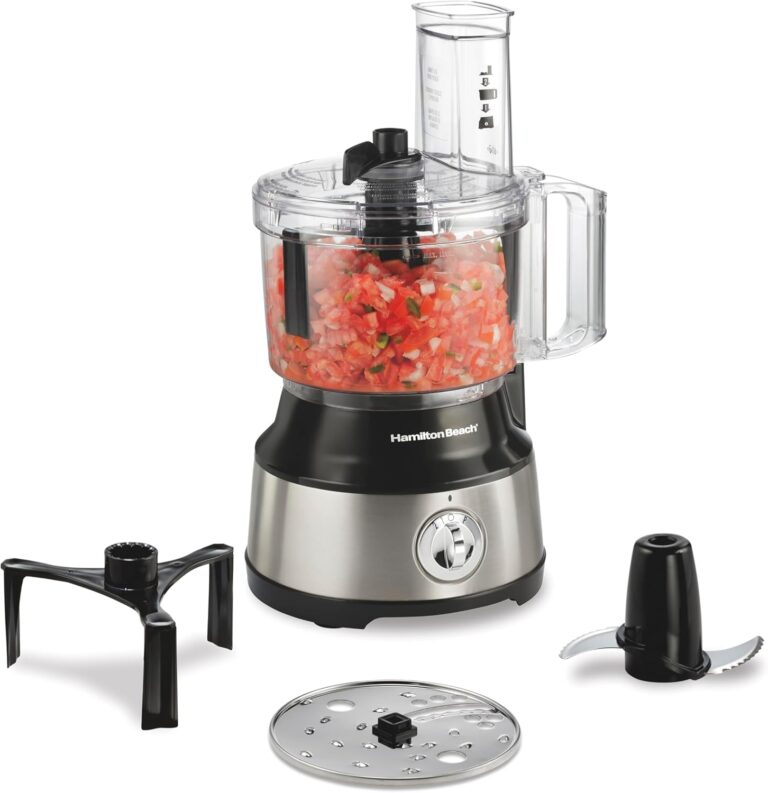 Objects shown to illustrate use are not a statement of included accessories; see the model and variant details. | 70730 10-cup / bowl scraper | Match the blade or disc to the task and observe the manual's batch limits. Consider storage for the bowl and discs, and check how the scraper and lid come apart for cleaning. |
Cuisinart 14-cup food processor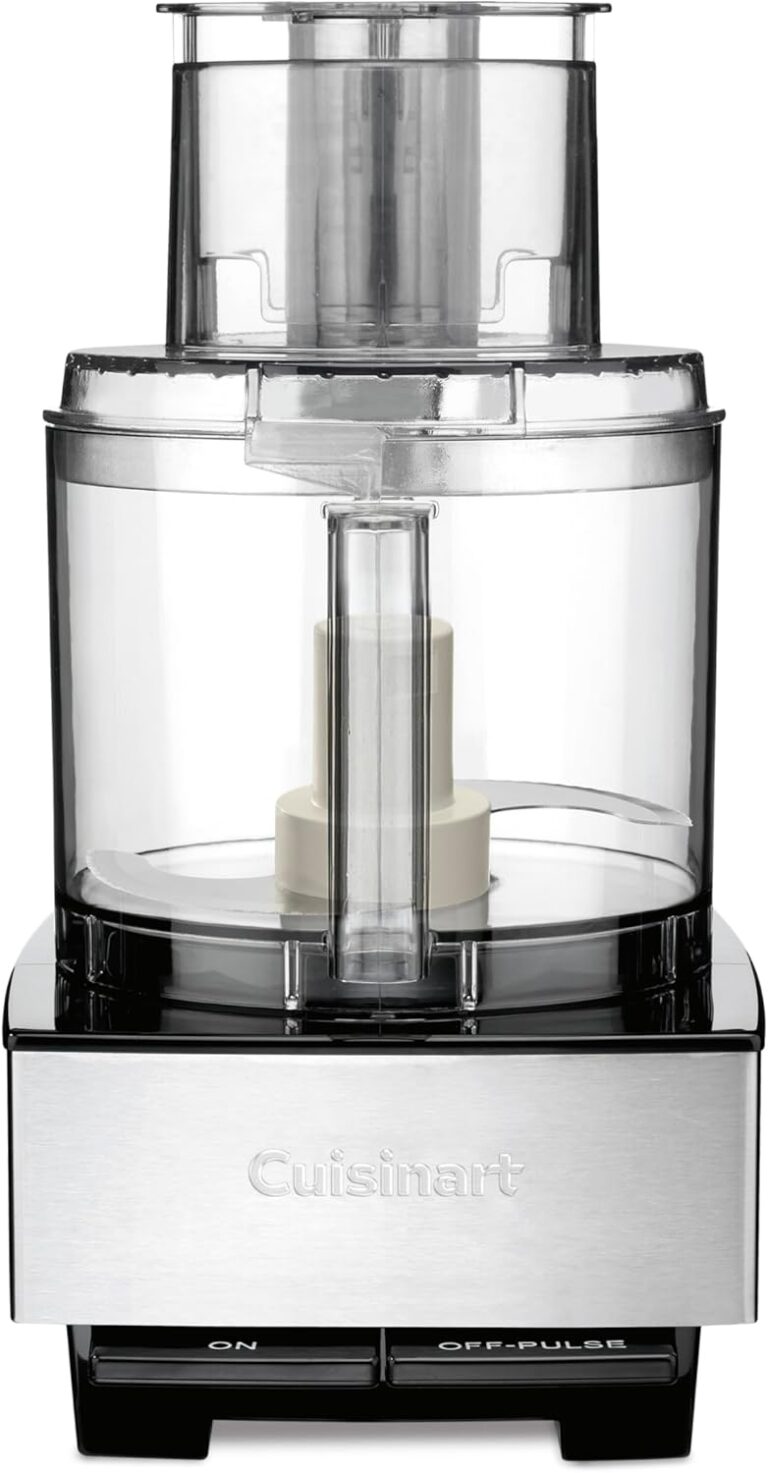 | DFP-14BCNY Stainless steel / 14 cups | Check the blade and disc package for this exact listing. The bowl's rated capacity does not mean every dough or liquid can be processed at that volume; use the recipe limits in the manual. |
Ninja BN601 food processor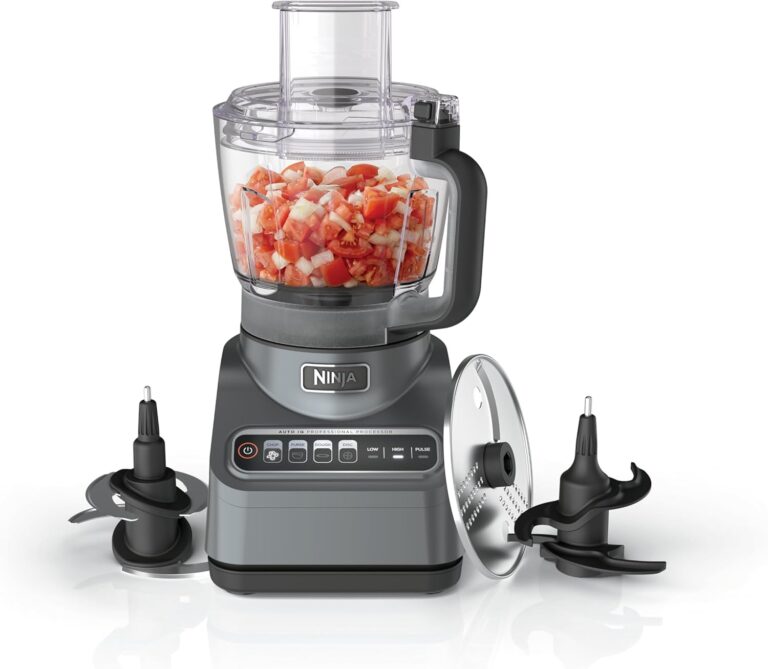 Objects shown to illustrate use are not a statement of included accessories; see the model and variant details. | BN601 Grey / 9-cup processor | Peak power is not a direct measure of continuous consumption or results. Compare the bowl size and accessories with the tasks you actually need, and follow the manual's dough quantities. |
Our Top Picks for 2026
Cuisinart 14-cup food processor
A 14-cup food processor identified as DFP-14BCNY, with a 720 W motor. The large bowl is useful to compare with smaller processors when preparing ingredients for several portions.
Variant: Stainless steel / 14 cups
Check the blade and disc package for this exact listing. The bowl's rated capacity does not mean every dough or liquid can be processed at that volume; use the recipe limits in the manual.
View product details →View on AmazonObjects shown to illustrate use are not a statement of included accessories; see the model and variant details.
Hamilton Beach 70730 food processor
A 10-cup food processor with a bowl scraper for moving ingredients back toward the blades. It offers a processor bowl for chopping, slicing and shredding rather than a blender jug.
Variant: 10-cup / bowl scraper
Match the blade or disc to the task and observe the manual's batch limits. Consider storage for the bowl and discs, and check how the scraper and lid come apart for cleaning.
View product details →View on AmazonObjects shown to illustrate use are not a statement of included accessories; see the model and variant details.
Ninja BN601 food processor
A 9-cup food processor with a 1000-peak-watt motor base. The documented package includes chopping and dough blades and a reversible slicing and shredding disc.
Variant: Grey / 9-cup processor
Peak power is not a direct measure of continuous consumption or results. Compare the bowl size and accessories with the tasks you actually need, and follow the manual's dough quantities.
View product details →View on AmazonBuyer's Guide: Choosing a Food Processor for Home Cooking
Full-Size vs. Compact vs. Mini: Which Capacity Do You Actually Need?
The right capacity depends on how many people you cook for and how much prep you do at one time:
1–2 people, occasional prep: A 3–4 cup mini chopper handles quick tasks — garlic, herbs, small batches of dip. A 7–9 cup model covers moderate meal prep without taking up full-size counter space.
3–4 people, regular weekly prep: A 9–11 cup model is the most practical middle ground. The Ninja BN601 (9-cup) or Hamilton Beach 70730 (10-cup) handle a family’s weekly vegetables and prep tasks without requiring multiple bowl refills for each recipe.
4–6 people, batch cooking: The Cuisinart 14-cup is the right tool when you’re prepping multiple recipes at once or cooking in large quantities. Fewer refills and a wide feed tube make the process meaningfully faster.
What Can a Food Processor Actually Replace?
Food processors excel at repetitive tasks that would take significant knife time: shredding a block of cheese, slicing a 5-pound bag of carrots, chopping 6 onions, or slicing cabbage for coleslaw. For single-ingredient tasks on large quantities, a food processor reduces prep time substantially.
Where a food processor doesn’t replace a knife: fine brunoise cuts, single-item mincing, or tasks where precise thickness or size matters. Food processors slice at one preset thickness — for variable cuts, knife work remains necessary.
The Bowl Scraper Feature: More Useful Than It Sounds
Standard food processors require stopping and opening the lid to scrape food down the sides during processing. The Hamilton Beach 70730’s built-in bowl scraper handles this automatically — it pushes ingredients back toward the blade during processing so you don’t interrupt the work. For sticky or wet ingredients, this makes a noticeable practical difference in how often you stop and restart.
Tip: Food processors work best on dry or semi-dry ingredients.
Adding too much liquid to a food processor bowl can cause leaks around the blade shaft. For smooth wet purees and soups, a blender is better suited. Food processors are most efficient on raw or lightly cooked vegetables, hard cheese, nuts, dry grains, and dough — where a blender would struggle or overflow.
Storage: Counter vs. Cabinet
A full-size 14-cup food processor typically stands 15–17 inches tall with its bowl and lid assembled. Many kitchen cabinets have 14–16 inch clearance — which means a full-size processor may not fit on a standard shelf. If you plan to store it away between uses, measure your cabinet clearance before purchasing. Compact 9–10 cup models are typically 13–15 inches tall and fit more common cabinet dimensions.
Frequently Asked Questions
What size food processor do I need for everyday home cooking?
For most home cooks, a 7–11 cup food processor handles the majority of everyday tasks: chopping vegetables, making sauces, shredding cheese, and slicing. Families of 4+ benefit from a 11–14 cup model when batch-cooking or prepping large quantities. A 3–4 cup mini chopper is useful for quick single-ingredient jobs like mincing garlic, herbs, or making small batches of dip, but is not a replacement for a full-size processor.
What is the difference between a food processor and a blender?
A food processor is designed for solid and semi-solid foods — chopping, slicing, shredding, dicing, and dough. It uses a wide, shallow bowl with interchangeable blades and discs. A blender is designed for liquids and wet blending — smoothies, soups, sauces. The two appliances overlap in some tasks (like pureeing), but for dry ingredient prep and slicing, a food processor is the right tool. A blender cannot slice or shred.
How difficult are food processors to clean?
Most modern food processors have dishwasher-safe bowls, lids, and blades, making cleaning manageable. The main cleaning challenge is the blade assembly — it should be handled carefully. The motor base is never submerged and only needs a damp wipe. Food processors with fewer parts and wide bowl openings are easier to clean than compact models with narrow openings.
Can a food processor replace a knife for meal prep?
For repetitive tasks, yes. A food processor handles slicing, shredding, and chopping in a fraction of the time of knife work — particularly useful for large quantities of onions, carrots, potatoes, or cheese. For fine knife work requiring precision (fine brunoise, specific cuts), a knife remains the right tool. Food processors are particularly valuable for batch meal prep where the same ingredient is being processed in large volume.
Do I need a food processor if I already own a blender?
They serve different purposes. A blender handles liquids and smoothies well but cannot shred cheese, slice vegetables, or make pie dough. A food processor handles solid and semi-solid prep well but is not ideal for smooth liquid blending. Many home kitchens benefit from having both — or choosing a food processor first if meal prep is the priority, since blending can often be done by hand or with an immersion blender for everyday tasks.