Best Meal Prep Containers: Glass, Leakproof, and Stackable Options for 2026
Best meal prep containers in 2026 — glass, leakproof, and stackable options for every meal prep style. From batch lunches to full weekly prep routines. Honest guide, no fake ratings.
In this guide
Affiliate Disclosure:
As an Amazon Associate I earn from qualifying purchases. Product images shown are representative lifestyle photos — we do not display Amazon or manufacturer product images. We do not display live prices, ratings, or availability. Links open Amazon in a new tab.
Representative kitchen image — view exact product photos on Amazon.
Who This Guide Is For
This guide is for people who meal prep regularly — batch-cooking on Sundays, packing weekday lunches, prepping snacks and grains in advance — and want containers that don’t leak in a bag, don’t stain from tomato sauce, and don’t absorb the smell of last Tuesday’s curry. We cover three categories: glass containers for reheating, leakproof plastic for portable meals, and stackable airtight containers for organized storage.
We are not covering single-use containers, divided bento-style containers, or insulated food jars. Those serve different use cases and belong in a separate guide.
How We Chose These Containers
We evaluated meal prep containers based on verified product specifications, material properties, practical daily use factors, and fit for each use case. Our selection criteria:
Material match to use case: Glass for reheating, BPA-free plastic for portability, airtight for dry storage.
Seal quality: A “leakproof” claim means nothing if the lid warps after 10 dishwasher cycles. We focused on designs with consistent seal mechanisms.
Stackability: Containers that stack cleanly save significant fridge and cabinet space. Straight-sided designs stack better than tapered ones.
Dishwasher durability: All three picks are dishwasher safe. Containers you have to hand-wash don’t survive real meal prep routines.
Value at scale: Meal prep requires 5–10 containers at minimum. Pack value and per-unit cost matter.
5 Things to Know Before You Buy Meal Prep Containers
Meal Prep Container Buyer's Checklist
Glass and plastic serve different jobs. Glass is better for microwave and oven reheating — it doesn’t leach, stain, or absorb odors. Plastic is lighter, more portable, and can be more reliably leakproof. Most active meal preppers use both: glass for at-home meals, plastic for work lunches that go in a bag.
Leakproof is not the same across brands. Some “leakproof” containers are sealed enough for upright transport but will leak if the bag tips sideways. The Rubbermaid Brilliance uses a four-point locking lid that genuinely passes the shake-and-invert test. If you’re packing soups or saucy foods in a bag that moves around, this distinction matters.
Straight sides stack better than tapered ones. Tapered containers nest inside each other (saves storage space when empty) but don’t stack level when full. The OXO POP containers have perfectly straight sides and stack precisely when full — important if your fridge has limited vertical clearance.
The Prep Naturals gallery identifies borosilicate glass bases. Follow the manufacturer’s care instructions for bases and lids separately; suitability for a freezer, microwave or oven does not mean glass can withstand sudden temperature changes.
How many containers do you actually need? For five weekday lunches, five containers is the bare minimum. In practice, 8–10 is more realistic — you need containers in use, clean containers ready, and extras for dinners or snacks. The Prep Naturals 10-pack is designed around this real-world quantity.
Quick Comparison Table
Product | Model & variant | Choosing |
|---|---|---|
OXO POP 10-piece container set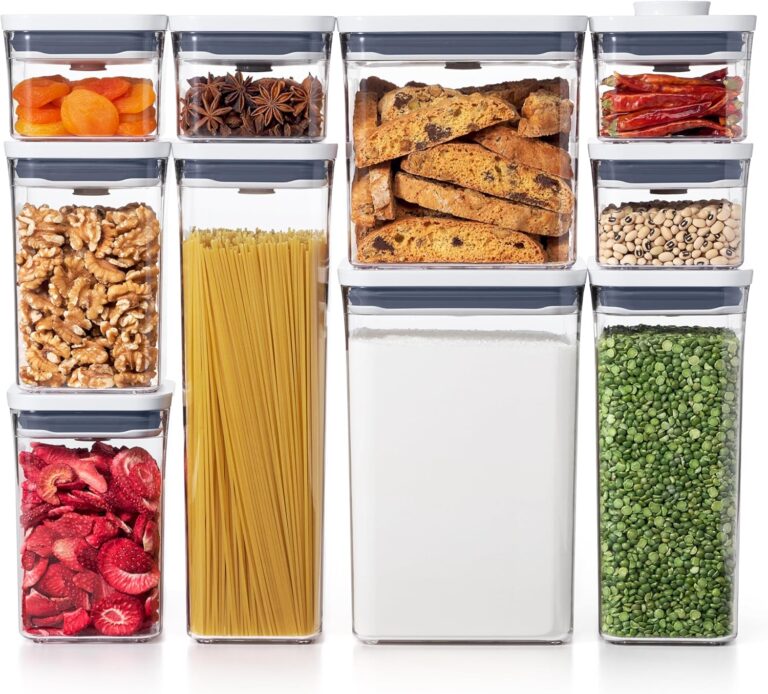 Objects shown to illustrate use are not a statement of included accessories; see the model and variant details. | Good Grips POP 10-piece 10-piece POP container set | Compare the individual container capacities with the packets you normally buy. Check shelf height with the lid fitted; this set should not be assumed to share every size in the five-piece POP package. |
Rubbermaid Brilliance 24-piece set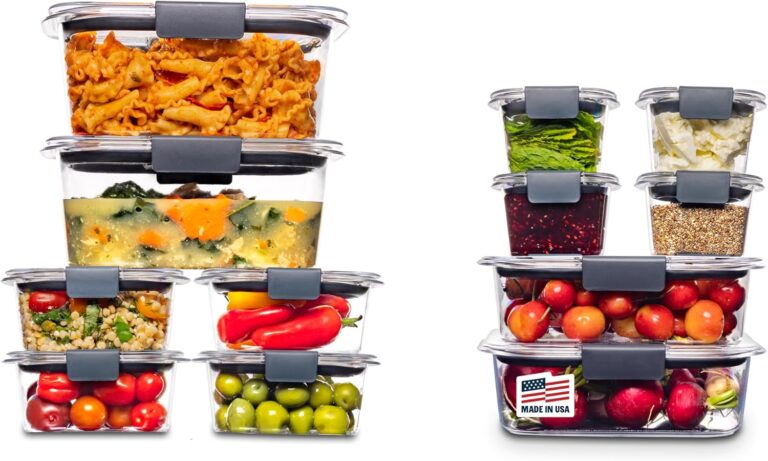 Objects shown to illustrate use are not a statement of included accessories; see the model and variant details. | Brilliance 24-piece Clear / 24 pieces including lids | Count the containers separately from the lids and check their capacities. Follow the product's heating and cleaning instructions; plastic storage containers must not be treated as oven cookware. |
Prep Naturals ten-pack glass containers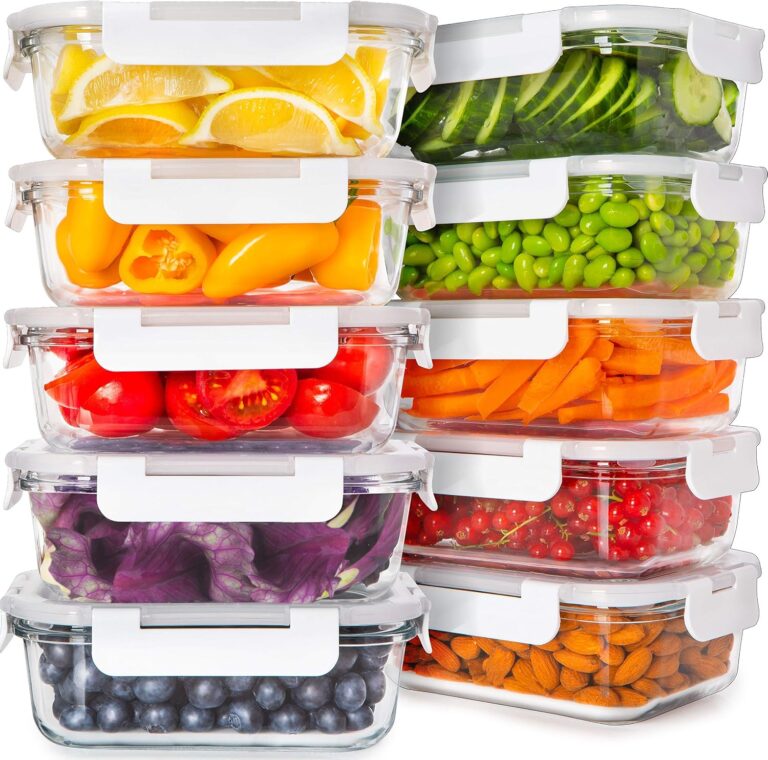 Food is shown for illustration and is not included. Each container has one undivided compartment. | Glass Food Containers 10-Pack Glass / ten-pack / 24 oz / one undivided compartment per container | One compartment per container, without internal dividers. The gallery identifies a ten-pack of 24 oz containers. Follow the care instructions for glass and lids separately; avoid sudden temperature changes. Food in the photograph is not included. |
Our Top Picks for 2026
Food is shown for illustration and is not included. Each container has one undivided compartment.
Prep Naturals ten-pack glass containers
Ten glass containers with locking lids for portioning meals and storing leftovers. Each 24 oz container has one undivided compartment; choose separate containers when foods need to stay apart.
Variant: Glass / ten-pack / 24 oz / one undivided compartment per container
One compartment per container, without internal dividers. The gallery identifies a ten-pack of 24 oz containers. Follow the care instructions for glass and lids separately; avoid sudden temperature changes. Food in the photograph is not included.
View product details →View on AmazonObjects shown to illustrate use are not a statement of included accessories; see the model and variant details.
Rubbermaid Brilliance 24-piece set
A clear plastic Brilliance food-storage set with 24 pieces including lids. The matching containers and lids provide portions for meal preparation and leftovers without the weight of glass containers.
Variant: Clear / 24 pieces including lids
Count the containers separately from the lids and check their capacities. Follow the product's heating and cleaning instructions; plastic storage containers must not be treated as oven cookware.
View product details →View on AmazonObjects shown to illustrate use are not a statement of included accessories; see the model and variant details.
OXO POP 10-piece container set
A set of ten POP food-storage containers for organizing dry ingredients. The push-button lid design lets you arrange a pantry around separate containers instead of keeping opened bags together.
Variant: 10-piece POP container set
Compare the individual container capacities with the packets you normally buy. Check shelf height with the lid fitted; this set should not be assumed to share every size in the five-piece POP package.
View product details →View on AmazonBuyer's Guide: Glass vs. Leakproof Plastic vs. Stackable Airtight
Glass Containers: Best for Reheating Without Compromise
The Prep Naturals set provides ten glass containers of 24 oz, each with one undivided compartment. It suits meals that can share a single space. Use separate containers if you need to keep foods apart; follow the care instructions before heating.
The real-world limitation is weight. A glass container full of food is noticeably heavier than the plastic equivalent. For a desk lunch you carry in a bag with a laptop, the weight adds up. Glass containers also chip and break if dropped, though borosilicate is more durable than standard glass. For at-home meal prep where containers move from prep area to fridge to microwave, glass is the cleanest option.
Leakproof Plastic: Best for Portable Meals
The Rubbermaid Brilliance’s four-point locking mechanism creates a seal that holds under real conditions — bag tipping sideways in transit, jostling on public transport, the shake test in the kitchen before you trust it with your work bag. The crystal-clear body lets you identify contents without opening. The stain-resistant material doesn’t hold tomato sauce color or garlic smell the way softer plastics do.
Leakproof plastic is the practical choice for any meal that travels. Glass containers with snap lids are airtight but are generally not designed to withstand the mechanical stress of being jostled in a bag — the snap lids rely on the container being upright. The Brilliance is engineered specifically for portability under pressure.
Stackable Airtight: Best for Organized Storage
The OXO POP system solves a specific organizational problem: prepped ingredients like cooked grains, sliced vegetables, nuts, and dry goods need airtight storage that stacks cleanly and doesn’t waste shelf space. The push-button mechanism creates a vacuum seal with one press — open with the same button, reseal the same way. No locking tabs to align, no lid-snapping frustration.
The modular sizing system means containers from the same product line fit together in an organized grid on a shelf. For meal preppers who value a visually organized fridge and pantry, this is a meaningful quality-of-life difference. OXO POP is not designed for heating — use it for storage and transfer food to a different container for reheating.
Tip: Label your containers.
A roll of painter’s tape and a marker is all you need. Label each container with the contents and date before it goes into the fridge. It takes five seconds and eliminates the mystery-food problem at the end of the week. Painter’s tape peels off cleanly without leaving residue on glass or plastic.
Frequently Asked Questions
Are glass or plastic meal prep containers better?
Both have clear use cases. Glass containers are better for microwave and oven reheating — they don’t leach chemicals when heated, don’t stain from tomato sauce, and don’t absorb food odors over time. The tradeoff is weight and breakability. Plastic containers are lighter, more portable, and can be more reliably leakproof for bags. The practical answer: use glass for at-home reheating and plastic for lunch-on-the-go.
How many meal prep containers do I need for a week?
For five weekday lunches, five containers is the minimum. In practice, most meal preppers use 7–10 containers to allow for dinners, snacks, and the reality that some containers are still in use when the next prep session happens. The Prep Naturals 10-pack is sized precisely for this — enough to prep a full week of lunches with a few spares.
Are the OXO POP containers fridge-safe?
Yes. OXO POP containers are safe for refrigerator and freezer storage. The airtight button seal keeps contents fresh and prevents fridge odors from transferring into the container. They are not microwave safe — OXO POP containers are designed for storage, not reheating. Transfer food to a microwave-safe dish or use glass containers for recipes you’ll reheat directly in the container.
Can I put meal prep containers in the freezer?
Most meal prep containers are freezer safe, but the specifics matter. The Prep Naturals glass containers are freezer safe — leave headspace for liquids that expand when frozen. The Rubbermaid Brilliance is freezer safe down to -40°F. The OXO POP containers are freezer safe and work particularly well for storing prepped grains like quinoa or rice.
What does BPA-free mean and does it matter?
BPA (bisphenol A) is a chemical used to harden certain plastics, including food storage containers. Studies have linked BPA exposure to hormonal disruption. BPA-free plastic does not contain this compound. All three containers in this guide are BPA-free. Note that ‘BPA-free’ does not automatically mean all plastic chemicals are absent — it means this specific compound was not used. For zero-plastic reheating, glass remains the most conservative choice.