Best Road Trip Gear for Cars: Chargers, Phone Mounts, and Tire Tools for 2026
The best road trip gear for cars in 2026 — USB-C car chargers, phone mounts, and portable tire inflators. Honest guide: no fake ratings, no sponsored rankings.
In this guide
Affiliate Disclosure:
As an Amazon Associate I earn from qualifying purchases. We do not display live prices, ratings, or availability. Links open Amazon in a new tab.
Who This Guide Is For
This guide is for drivers and families who want a few practical accessories that make long drives and road trips more convenient — a reliable way to keep phones charged, a stable mount for navigation, and a compact tire inflator for peace of mind on the road. We focus on products that address real, recurring needs on everyday drives and longer trips.
We are not covering luxury in-car entertainment systems, aftermarket audio upgrades, or towing accessories. This guide focuses on three practical categories: car charging, phone mounting, and tire maintenance tools.
How We Chose These Products
We research, compare, and explain products based on use cases, specifications, public product information, and buyer needs. Our selection criteria for road trip accessories:
Practical utility: Does this solve a real, recurring problem on drives and road trips?
Reliability: Is this a category-proven product from an established brand with a track record?
Ease of use: Can a typical driver use this without a manual or technical setup?
Honest fit: Each pick addresses one specific need — charging, mounting, or tire maintenance — and is selected for that job, not as a general “must-have.”
5 Things to Know Before You Buy Road Trip Gear
Road Trip Gear Checklist
USB-C is the current standard for most devices. Most smartphones, tablets, and earbuds released after 2022 charge via USB-C. If your car’s existing charger has only USB-A ports, a dual USB-C charger like the Anker PowerDrive III Duo is a direct upgrade. Check whether your devices require a cable (sold separately) — most USB-C chargers do not include cables.
Phone mount placement has legal implications. Laws governing where a phone mount can be placed on a windshield or dashboard vary by state and country. Check your local regulations. Dashboard mounts (below the sight line) are generally more widely permitted than center-of-windshield placements.
A portable tire inflator doesn’t replace a spare tire. A portable inflator is useful for topping off tires that are slightly low — which is the most common tire situation on a road trip. It won’t repair a puncture. If you carry a full-size spare or run-flat tires, a portable inflator is still a useful tool for routine pressure checks before long drives.
Recommended tire pressure varies by vehicle. It’s printed on a sticker inside the driver’s door jamb — not on the tire sidewall (that number is the maximum, not the recommended). The AstroAI inflator has a preset pressure function: dial in your car’s target PSI and it stops automatically when that pressure is reached.
Suction cup mounts need clean, dry surfaces to hold. A suction cup phone mount works best on smooth, dust-free, dry surfaces. Textured dashboards benefit from the adhesive dash pad that typically comes included. Clean the mounting surface before first installation — any dust, oil, or moisture reduces holding strength.
Quick Comparison Table
Product | Model & variant | Choosing |
|---|---|---|
AstroAI AIRUN H inflator | AIRUN H / CZK-3631 Yellow / 12 V DC / corded | Check socket requirements, cable reach and the tire sizes covered by the manual. Follow the operating and cooling intervals; an automatic pressure stop does not remove those limits. |
Anker PowerDrive III Duo car charger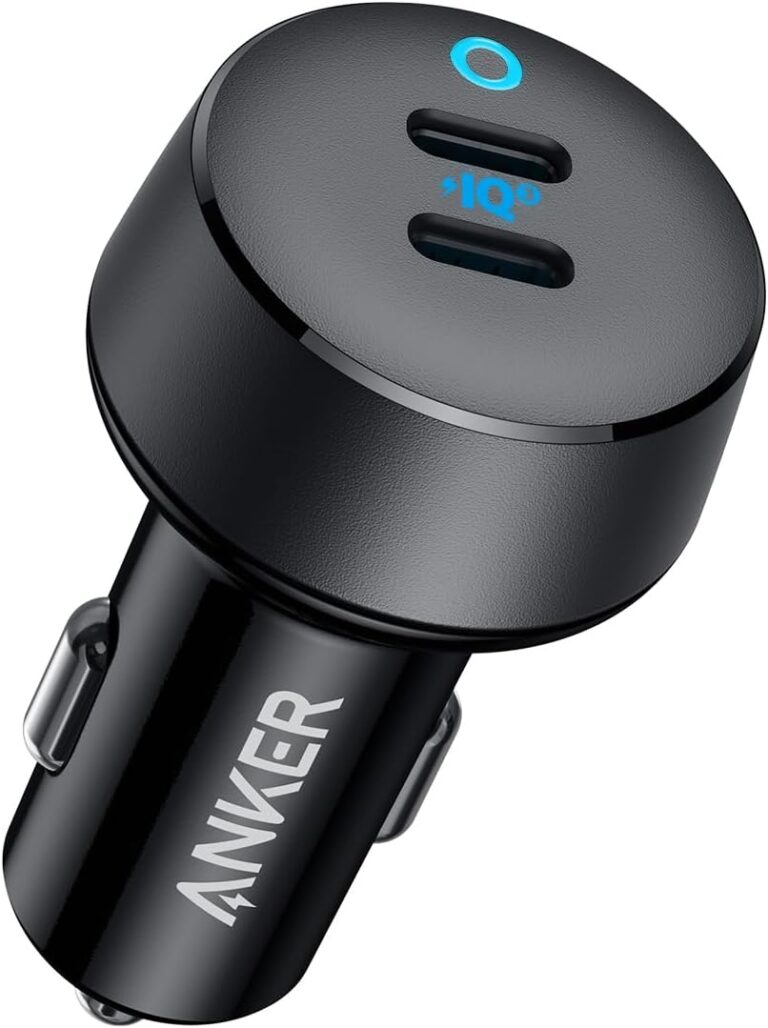 | A2724 / PowerDrive III Duo Black / two USB-C ports / 40 W total | Compare the per-port output and charging protocol with your phone or tablet. The combined rating is not automatically available from one port, and a suitable cable is still required. |
iOttie Easy One Touch Signature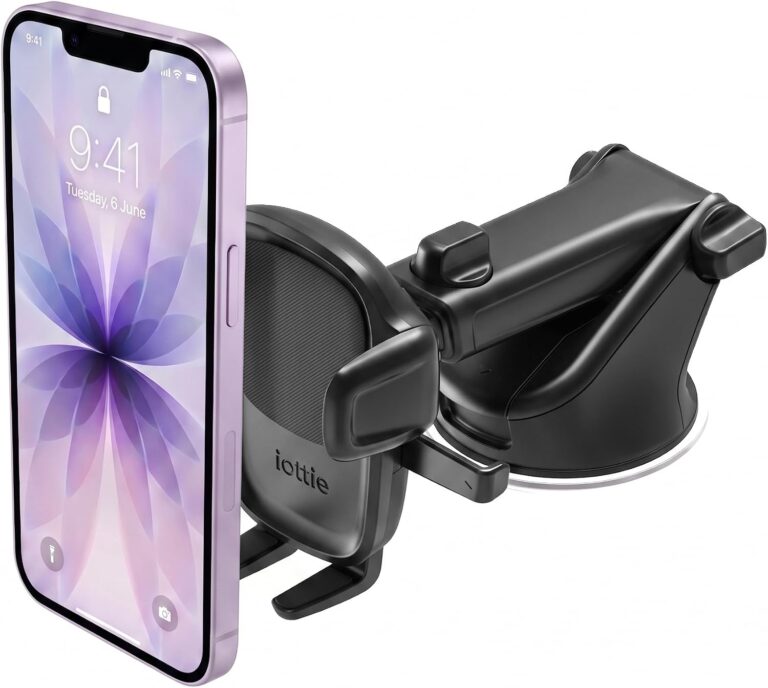 Objects shown to illustrate use are not a statement of included accessories; see the model and variant details. | Easy One Touch Signature Black / dashboard and windscreen mount | Check the surface material, phone width with its case and arm clearance. Choose a position that does not obstruct visibility, controls or airbag deployment. |
Our Top Picks for 2026
Anker PowerDrive III Duo car charger
A car charger with two USB-C ports and a combined 40 W rating. The PowerDrive III Duo is model A2724, intended for charging compatible devices from a vehicle socket.
Variant: Black / two USB-C ports / 40 W total
Compare the per-port output and charging protocol with your phone or tablet. The combined rating is not automatically available from one port, and a suitable cable is still required.
View product details →View on AmazonObjects shown to illustrate use are not a statement of included accessories; see the model and variant details.
iOttie Easy One Touch Signature
A dashboard and windscreen phone mount with a suction-cup base and telescopic arm. This is the Easy One Touch Signature mount rather than an air-vent clip.
Variant: Black / dashboard and windscreen mount
Check the surface material, phone width with its case and arm clearance. Choose a position that does not obstruct visibility, controls or airbag deployment.
View product details →View on AmazonAstroAI AIRUN H inflator
A yellow 12 V DC tire inflator with a digital pressure display and automatic shutoff. The AIRUN H is a corded vehicle-powered model, separate from the cordless AstroAI L7 already in the catalog.
Variant: Yellow / 12 V DC / corded
Check socket requirements, cable reach and the tire sizes covered by the manual. Follow the operating and cooling intervals; an automatic pressure stop does not remove those limits.
View product details →View on AmazonBuyer's Guide: Practical Road Trip Essentials
Car Charging: Why USB-C Matters in 2026
USB-C has become the standard charging port for essentially all current smartphones, tablets, and accessories. If your car’s existing charger has USB-A ports only, a dual USB-C charger like the Anker PowerDrive III Duo is a meaningful upgrade — USB-A maxes out at 12W for most devices, while USB-C with Power Delivery can deliver 18W–27W or more per port.
For a family road trip with multiple people charging devices, 40W total output keeps two devices charged simultaneously without either falling behind in battery level. The practical test: if a GPS app is running on one phone, you need at least 12–15W to prevent the battery from draining faster than the charger refills it. The Anker 40W model handles this reliably for most current devices.
Phone Mounts: What Stability Actually Requires
A phone mount that wobbles on highway vibrations, tilts when you tap the navigation screen, or falls when you hit a bump creates a worse distraction than holding the phone manually. The iOttie Easy One Touch Signature addresses the main failure modes: the suction cup provides a strong base, the telescopic arm has locking positions, and the cradle grips the phone securely rather than relying only on gravity.
Dashboard vs. windshield mounting is a positioning choice. Dashboard placement keeps the phone lower in the visual field, closer to where you’d glance at the speedometer — some drivers find this less distracting. Windshield placement puts the phone higher, closer to eye level for GPS arrows — some drivers find this easier to glance at. The iOttie model supports both, so you can find the position that works best in your specific car.
Tire Inflators: What to Keep in the Car
The most common tire situation on a road trip isn’t a blowout — it’s a tire that’s 5–15 PSI below the recommended pressure after sitting overnight in cold weather or a slow leak that took days to develop. A 12V DC inflator handles this in 1–3 minutes and weighs under 2 pounds. The AstroAI’s preset pressure function means you dial in your car’s recommended PSI (found on the driver’s door jamb sticker), connect the hose, and let the inflator stop automatically when it reaches the target.
Tip: Keep a tire pressure gauge in the glove compartment regardless.
A separate tire-pressure gauge lets you check pressure without using the inflator. Follow the vehicle manufacturer’s pressure-checking instructions before a long journey.
Frequently Asked Questions
How fast can a car charger actually charge my phone?
The Anker PowerDrive III Duo delivers up to 18W per port when both ports are in use simultaneously. For most smartphones, 18W is sufficient to maintain or increase battery level while navigation and music are running. iPhone 15 Pro charges at up to 27W; most Android flagships at 18W–25W over USB-C. Both keep pace with typical in-car drain during active use.
What type of car phone mount is most stable?
Suction cup mounts (dashboard or windshield) are the most adjustable and widely compatible. The suction cup provides a strong hold on smooth surfaces and can be repositioned. For most family cars, a dashboard or windshield suction mount like the iOttie Easy One Touch Signature offers the best combination of stability, adjustability, and compatibility.
When should I check my tire pressure?
Check tire pressure when tires are cold — parked for at least three hours or driven less than a mile. Driving heats the tire and temporarily increases pressure readings. Check before a road trip, when outside temperature drops significantly (tires lose about 1 PSI per 10°F drop), and when the TPMS warning light appears.
Can a portable tire inflator fully inflate a flat tire?
Yes, but it takes longer than topping off a low tire — expect 10–20 minutes to inflate a completely flat passenger car tire with a 12V compressor. For a tire that’s just 5–10 PSI low (the most common scenario), a 12V inflator handles it in 1–3 minutes. The AstroAI’s auto shutoff stops inflation at your preset target PSI.
Does a phone mount block the view while driving?
Laws on phone mount placement vary by jurisdiction. Dashboard mounts (lower on the dash) are generally safer from a sight-line standpoint than windshield mounts positioned in the center of the glass. The iOttie Easy One Touch Signature supports both mounting positions, giving you flexibility to find a legal and practical position in your specific vehicle.